Back to Air Force EPR
The EPR Code - Part II
How to Sabotage the Promotion Statement
Comments from the rater or the rater's rater are the most important part of the EPR. Promotion board members depend on this section of the EPR to provide the most revealing information about the individual they are evaluating. They are aware of the code and know that the graduations of performance documented here are universally understood. Although an Airman may have received a standard -5- EPR, the promotion statement will relegate the Airman to one of several stratums.
It's easy to slip in a seemingly acceptable but ultimately derogatory promotion statement. In real life, we understand the words, adequate, acceptable, and average, to be positive adjectives. But, in today's Air Force we are expected to exceed standards, stand head and shoulders above our peers, and be #1 of 12 airmen in the workcenter all the time. That's how the code works. If the rater describes the ratee's performance as anything but ABSOLUTE BEST EVER, PROMOTE IMMEDIATELY!, he's history.
But the rater doesn't have to resort to such transparent statements. English is a marvelously subtle language, awash in nuance and double meaning, as it is. In this "Through the Looking Glass" world of Air Force Performance Report english, up is down, hot is cold, and always means never. To give you an idea of how positive sounding descriptions can telegraph not-so-good performance, check out this ranking of promotion statements taken from a popular and authoritative Air Force Eval guide:
SAMPLE STRATIFICATION LEVELS
Top Level
- My #1 of 12
- Top 1%
- #1 of 7 MSgts in my division
- My #2/24 Staff Sergeants
- 1 of my top 2 support NCOs
2nd Level
- Top 5%-10% of his peers
- Top 10% of my Senior NCOs
- Top 10% of Tech Sergeants I’ve seen in 20 years
- Top 5% of my star-studded cast of Airmen
- Top 10% talent
3rd Level
- A leader of incredible breadth
- Impact leader—gets results
- My fire and forget weapon
- Leadership his hallmark, excellence the norm!
- One of my best
4th Level
- Outstanding
- Superior
- Exemplary! Sharp, honest professional
- A thoroughbred running full stride
- Pure gold! Gutsy, incisive leadership
- Nerves of steel—rare talent
- MVP from day 1
Who would have ever thought that these 4th-level bullet statements are appropriate for the lowest level of performance?! Not me! I would have been happy to have seen any of these statements in my EPR! The lesson that we should learn from this is that you can say just about anything you want about someone but if you haven't qualified the statement by comparing him or her against their peers, you might as well not say anything at all. This is a great way of disguising your intent if your aim is to produce an ineffective EPR.
NOTE: This section on stratification is only here to illustrate the subtle shades of meaning often used in performance reports. Stratification is not authorized in EPRs for AB through TSgt.
Promotion Statements are the most common method of sending hidden signals. They can be written strong or written like a dormant computer virus. For example:
- SSgt Smith will make a good first-line maintainer; promote when ready
Any NCO reading this promotion statement would understand its meaning immediately: the rater doesn't believe this troop should be promoted. Even though the rater is complimentary and even orders a promotion, this statement really says that SSgt Smith is not a good first-line maintainer now but will be one day (sometime in the distant future probably). Furthermore, by writing, "promote when ready", the rater is clearly stating that the ratee is not ready now. Otherwise the rater would have written, "promote now". This is a classic example of the code. It says "promote" but clearly means don't promote.
Another example:
- Good performer with potential to be an outstanding Airman and a valuable asset; promote with peers
This promotion statement is the kiss of death. It has sub-standard written all over it. Good? What about "top" or "best" or "great"? Potential? Potential is one of those universally recognized key words I told you about. This phrase, "potential to be", is understood to mean that, although you have the capability of someday being an outstanding Airman, you are not one now. And just why you're not one now we're left to wonder. But there's no mistaking the message: You are not an outstanding Airman which is probably a polite way of saying you're sub-standard. And promote with peers? agghhhhhhh!!!! Although the supervisor did write, "promote", he qualified it with "with peers". This indicates that the rater doesn't think you're ahead of the pack but should only be promoted when EVERYBODY ELSE is! In real life, there is, of course, nothing wrong with being average or being promoted at the same time as your peers. But remember, we're in the Air Force and we must adhere to the code. In the Air Force, Airman are bulletproof and Officers are immortal. So to slander someone with a statement like Promote With Peers is like saying your ancestors are from France. If you see this on your EPR, consider pounding your supervisor.
Other examples of "not ready for prime time" statements:
- groom for SMSgt This phrase suggests that further preparation or grooming is necessary before the person will be ready for promotion to SMSgt or that the individual is not currently ready for promotion. Subtle, eh? I thought it meant that the rater approved of the ratee and had given him his blessings but that's not what it means at all!
- continue to challenge with... Although this phrase literally implies supervisor approval and a ratee who enjoys challenges, it is actually supervisor code for "this person is not ready to advance and should remain in his current position"; or "not ready for promotion". The logic behind this is that if a person was really high-speed, he'd be ready to graduate to more responsibility and a more demanding job. Air Force people are always advancing, always accepting greater responsibility. By saying "continue to challenge...", the rater is suggesting that he needs more practice at whatever it is he's currently doing. Or that he makes lousy coffee. One of those.
- Dependable NCO! Never fails to meet Air Force standards! Personally, if I had seen this on my EPR, I would have been flattered but I would have been wrong! This is bad. It's a disguised way of saying a person only "meets standards". In real life, meeting standards is a good thing but in the secret code of the EPR, it's about as bad as being a sex offender. Air Force people always exceed standards or maybe even invent their own.
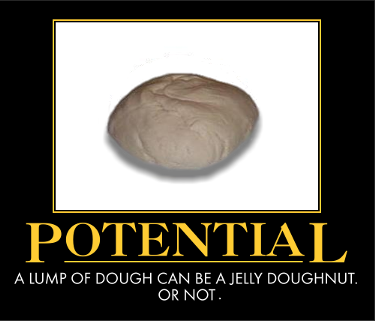
- has potential for success Even though this sounds promising and positive, it's not. When the rater writes that the person has the potential or the possibility of success, the rater is saying that the ratee is not actually a success -only that he has the potential to be a success. The same way a lump of dough has the potential to be a doughnut. It's a very common way of describing inferior or lackluster performance. Subtle yet plain. Even the least experienced NCOs can understand it.
- strives for perfection in all he does Although on any other planet, this would be received as a complimentary bullet statement, in the Air Force, it has long been a code phrase for "doesn't succeed" or "not quite ready for promotion". The reasoning behind this is that supposedly, if the ratee had actually been successful in his or her endeavors, the rater would have written "achieved perfection in all he does" or "reached perfection". The words, "strive" and "try" are understood to mean unsuccessfull as in "strived but didn't quite make it" or "tried but failed". So, to slip this by the ratee, couple the code words with something grand and heroic like "always strives to exceed world class standards". He'll never know what hit him.
- knowledgeable Airman with plenty of potential; continue to challenge for excellence--ready for promotion By now, I think you can recognize the pattern. The keyword, potential, indicates a current lack of ability. The phrase, continue to challenge, is a plea to keep this loser where he is and away from flammable materials. If the rater had thought that the Airman was capable of bigger projects with more responsibility, he would have stated something along those lines. Instead, by saying, continue to challenge, the rater is stating that the ratee isn't ready for advancement and should be kept in whatever position he currently holds. And "ready for promotion" is code for don't promote (see Key below). If the rater had believed the subject was ready for promotion, he would have used the phrase, promote now. And the overall statement is nothing but a ball of fluff that doesn't actually say anything.
- a motivated, dependable, and knowledgeable Airman, consider for promotion! This is another method of communicating the rater's opinion that the subject should not be promoted: state something positive first but then nullify it with the "consider for promotion" statement. It sounds positive. Consider for promotion, to the uninitiated, sounds like a recommendation for promotion. But any NCO knows that consider is Supervisors Code for "consider or think about it but not very seriously". See the key below. If the rater really thought the ratee should be promoted, he would have written something more definite like "promote", "promote now", or "promote immediately".
Another example: - A1C Snuffy has the potential/talent to progress; recommend review of Enlisted Force Structure This statement is more direct. In addition to calling attention to a decided lack of effort, this statement also warns any future reviewer of discipline problems with the ratee.
To paint an exceptionally mediocre word picture of the ratee:
On the promotion statement, for those who deserve it (which is just about anybody with a pulse these days), the last line should reflect the mediocrity of the performance compared to the last EPR. It shouldn't indicate any growth or progress or increase in authority since the last EPR.
The last line should not be hard-hitting or recommend progress to the next level of leadership or responsibility.
Stratification of less than the top 50% sends a strong negative message. Find a way to compare the ratee with the lower half of the rating pool, i.e., my #7 of 15 NCOs. Although it certainly works, this is sort of clumsy and obvious. A better strategy would be to poison the job recommendation.
Raters, when favorably reviewing a ratee's performance, always make recommendations as to what future position the ratee might excel at. To handicap your ratee, recommendations for the next job should be for a job at the same or lower level of responsibility than is currently held. This is the equivalent of "continue to challenge" and shows a lack of progress or potential for progress.
No promotion statement at all or a weak one. This ominous silence speaks volumes.
To hammer home the idea that the ratee is vulture bait, recommend retention in their currently held position. An example statement would be something like:
- best technical order tech we ever had; keep this winner managing our books!
Nothing says this person is not ready for promotion or increased responsibility like a veiled plea to keep them from leadership positions.
Make no PME recommendations. Recommending someone for PME ahead of their time is a time-honored method of endorsing the ratee for bigger and better things. Don't make a recommendation!
To confine the ratee to the lowest level of 5 purgatory, in the promotion statement, use the phrase "ready for promotion". This phrase is normally used for a "4" EPR and may not make it through the reviewing chain. Although the phrase , "ready for promotion", appears to be a positive sentiment, it's actually one of the agreed upon key phrases which means "Not Ready For Promotion". Or "consider for promotion after the rest of the free world has already been promoted. twice." Or use the stock phrase for "3" EPRs: "consider for promotion".
Promotion Statement Key:
- 5 - promote now, immediately, as soon as possible (promote)
- 4 - ready for promotion (don't promote)
- 3 - consider for promotion (never promote)
- 2 - no promotion statement (demote)
Put a community involvement bullet in last line instead of a promotion statement. Ouch!
Leave lots of white space on last line. An example of such a line might be: Met acceptable levels of performance.
Another great way to signal poor performance in a SNCO EPR is to NOT include any bullet statements in Section VII of the AF Form 911. When this section has the statement "This Section Not Used", it eventually means "Please demote this SNCO and take away his Senior Rater Endorsement".
In summary, using these techniques, you should be able to condemn anyone to a lackluster career without them even knowing it!
Reader comments:
Here's one I used for a 3 rating:
- Member can act as a professional warrior when focused--promote Airman when performing as "truly the best"
Great site! I don't have a suggestion but wanted to pass on the two most memorable non-promote statements I witnessed during my 22 years:
"Promote A1C Snuffy after all other personnel resources have been exhaused" and "Promote alongside those of equal quality".
One I used recently - "Constantly offers NCOs opportunities and challenges to implement new and innovative counseling methods"
My last flight chief told us about an EPR he wrote on a now discharged member of our unit:
"Cancer to morale; needs of Air Force would be best met by recruiting and training a new linguist"
"Amn snuffy has huge potential to meet standards; promotion needs consideration"
"- Young leader; continue to guide/direct & mentor--promote when fitting"
"- NCO does adequate work when under direct supervision"
This is just another example of what's wrong with our system. Instead of telling the truth, let's disguise our intent. I'm just as guilty as the rest, but we're all perpetuating the problem by "disguising your intent if your aim is to produce an ineffective EPR".
One of my personal favorites: "only assign this Airman to the most seasoned supervisor until inevitable discharge"...which, in this case, turned out to be about a month after closeout.
"I recommend him for promotion and retention with his peers."
"Skilled technician--gets job done w/in standards--w/grooming rdy for promotion"
"Challenged in current position; serving AF in greatest capacity based on current abilities--continue to develop"
"Increase guidance/mentorship; productive under supervision--promote when rdy!"
To include words that have a negative connotation. In maintenance using fail, even when it's a part or system, or wording to showing how bad something else is in a sequence of events makes the emotional feeling of the reader have negative feelings towards the EPR. Perhaps the feelings aren't towards the person but it affects mood and therefore outcome.
"- Airman in need of intense supervision on a daily basis; continue to closely monitor for satisfactory progress"
"- Solid Airman/worker that produces quality results; potential to excel w/guided mentorship--promote w/peers"
"- Amn Snuffy continues to test the Air Force's limits; promote when Lucifer is cold"
"- Environmentalist; continuously converts O2 to CO2--provides food to plants...consider for promotion to SrA"
This was on a SSgt's EPR!
Another great way to signal poor performance in a SNCO EPR is to NOT include any bullet statements in Section VII of the AF Form 911. When this section has the statement "This Section Not Used", it eventually means "Please demote this SNCO and take away his Senior Rater Endorsement".
Not true. Give you an example. You're the senior enlisted. Your boss is a major. His boss is an O6 and the deputy. There isn't another officer in the chain, you'll see these comments. If there was another officer in the chain a CRO could be an option but when there isn't you end up with these comments. Typically seen at the HQ level.
The SNCO "this section not used" is sometimes unavoidable. If you have a line # for Sr, haven't seen on yet, you aren't eligible for Sr eater endorsement. Your EPR may be signed as a MSgt and you may have previously been Sr rather eligible as a MSgt, but if you have a line #, you are out of the MSgt fight, and will get the "this section not used".